
Why the Golan Heights Are Often Misunderstood
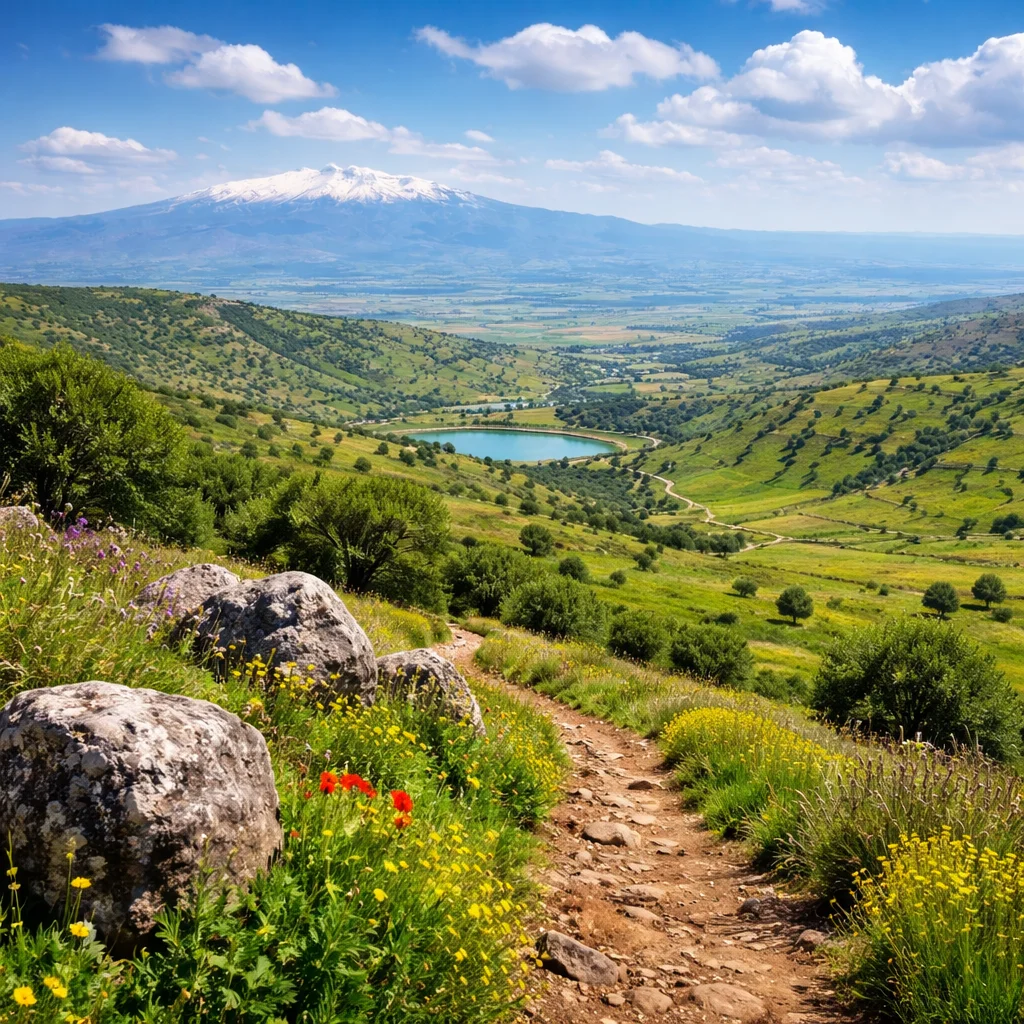
The Golan Heights are frequently presented as a destination for organized tours, off-road vehicles, boutique lodges, and wine tastings with a price tag to match. That image is incomplete. The Golan is first and foremost a working landscape: basalt plateaus, grazing land, reservoirs, streams, and small communities spread across open space. Its beauty is not curated. It is there every day.
Seeing the Golan does not require luxury planning. It requires time, attention, and an understanding of how the region actually functions.
Geography That Works in Your Favor
The Golan Heights rise gradually from the Sea of Galilee toward Mount Hermon. This means many of the best views are accessible from regular roads, roadside pull-offs, and short walking paths. Basalt formations shape the terrain, creating natural lookouts without the need for paid attractions.
Early morning and late afternoon light does most of the work. Wide horizons, changing cloud cover, and strong contrasts between dark volcanic rock and green valleys create views that look dramatic even without professional equipment.
Roads, Not Resorts
One of the simplest ways to experience the Golan is by driving slowly and stopping often. Secondary roads between Katzrin, Nov, and the southern Golan offer constant visual shifts: open pasture, sudden drops toward the Jordan Valley, and distant views of the Galilee.
You do not need an SUV. Most scenic points are accessible by standard vehicles. A basic car, a map, and patience are enough. This is where the Golan differs from destinations built around controlled access and ticketed viewpoints.
For travelers who prefer independence, personal transport remains the most flexible option. Platforms like https://avtor.top/, which focus on cars, driving, and practical vehicle use, often highlight how everyday transport choices influence travel experience. The Golan rewards exactly that mindset: practicality over display.
Walking Short, Seeing More
The Golan does not require long hikes to be impressive. Many of its most striking spots are reached within minutes of leaving the road. Seasonal streams, basalt cliffs, and open fields appear unexpectedly.
Short walks around reservoirs and observation points provide a sense of scale that guided routes often miss. You see agricultural infrastructure next to untouched land. Cows grazing next to ancient stone terraces. This contrast is part of the region’s character.
The Human Layer of the Landscape
The Golan is not empty. It is lived in. Farms, small settlements, vineyards, and industrial zones are part of the view. That human presence adds depth rather than detracts from the experience.
Understanding this everyday reality helps visitors move beyond postcard expectations. Local services, maintenance crews, and workers shape how the region looks and functions. Even industries that seem unrelated to tourism influence how accessible and clean these spaces remain.
For example, regional service providers like https://green-cleaner.nikk.co.il/ reflect a broader reality of northern Israel: infrastructure matters. Clean public areas, maintained facilities, and working environments contribute quietly to how landscapes are perceived by visitors.
Timing Beats Spending
One of the most effective ways to experience the Golan cheaply is choosing the right time. Weekdays are calmer. Early hours bring clearer air and less traffic. Seasonal changes transform the same locations without additional cost.
Winter brings snow near Hermon and dramatic skies. Spring fills the plateau with green fields and wildflowers. Summer emphasizes open space and long views. Autumn sharpens contrasts and reduces haze.
None of this requires reservations or premium packages.
Food Without the “Experience Tax”
Eating in the Golan does not have to mean curated tasting menus. Local eateries, roadside stands, and small cafés serve food that reflects the region’s agricultural base. Portions are practical. Prices are generally lower than in central Israel.
Picnics are also common and culturally accepted. Buying supplies in Katzrin or nearby towns and eating outdoors costs little and adds to the experience rather than diminishing it.
Work, Life, and Movement in the North
The Golan is part of a larger northern ecosystem. People commute. Goods move. Jobs exist that are not connected to tourism. Recognizing this helps visitors understand why the region feels different from resort-driven destinations.
Job and mobility platforms such as https://rabotka.org/ illustrate this everyday movement. Northern Israel attracts workers in agriculture, logistics, maintenance, and services. That flow of people keeps the region grounded. Visitors benefit from that stability, even if they never interact with it directly.
Avoiding the “Must-See” Trap
Lists of “top attractions” often lead travelers to the same crowded points. The Golan works better when approached without a checklist. Driving until something catches your attention, stopping when the view opens, walking a short distance off the road—these choices cost nothing and often deliver more.
Some of the most memorable moments in the Golan are unplanned: sudden fog lifting over a valley, distant rain over the Hula, silence broken only by wind and livestock.
What You Actually Pay For
In the Golan, you mostly pay for fuel and time. Everything else—views, space, quiet—is largely free. This makes the region accessible in a way that many scenic destinations are not.
There are paid sites, wineries, and attractions, but they are optional, not necessary. The core experience of the Golan exists outside commercial frameworks.
Why the Golan Feels Different
The Golan Heights do not market themselves aggressively. They function as a border region, an agricultural zone, and a natural plateau long before they act as a tourist destination. That order matters.
Beauty here is a byproduct, not a product. That is why it can be seen without spending heavily.
A Practical Conclusion
Seeing the beauty of Israel’s Golan Heights does not require wealth, luxury lodging, or curated experiences. It requires mobility, awareness, and restraint. The region rewards those who slow down, observe, and accept its everyday character.
The Golan is generous with space and views. It does not ask much in return.