Relocating to Israel usually begins with practical priorities: paperwork, housing, work, language. But very quickly it becomes clear that daily logistics alone are not enough to truly adapt. Israel cannot be understood through offices, Telegram chats, or checklists. It requires direct experience — moving through the country, observing people, and understanding how history, security, and everyday life intersect.
That is why the first months after relocation matter so much. They shape how Israel is perceived not as a temporary stop, but as a system you will live and operate within. This contextual approach is also central to NAnews — Israel News | Nikk.Agency, which focuses on explaining Israel through processes rather than clichés:
https://nikk.agency/
At the same time, relocation almost always brings professional questions. How the local market works, how visibility is built, how services are promoted, how clients think. Israel’s digital environment follows different rules than Eastern Europe or North America. Understanding SEO, lead generation, and digital marketing in Israel early on can save time and costly mistakes. One practical reference point for this ecosystem is:
https://nikk.co.il/ru/
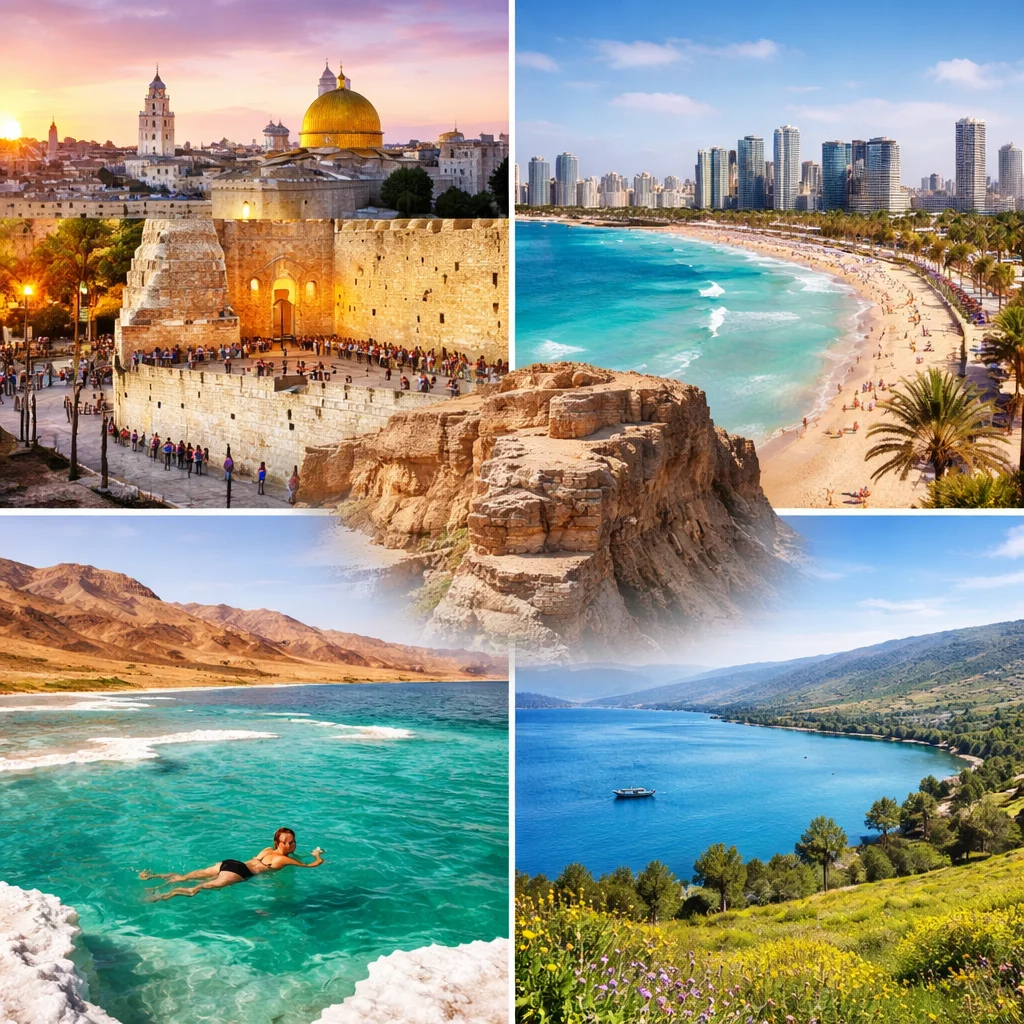
Below are five places that help new residents build a realistic, grounded understanding of Israel — beyond tourism.
1. Jerusalem — Where the Complexity Becomes Clear
Jerusalem is rarely comfortable. It is dense, emotional, political, and layered with meaning. But precisely because of that, it is essential. Jerusalem explains why Israel cannot be simplified.
For a relocator, this city functions as a context reset. Walking through its neighborhoods makes abstract news headlines tangible. Religion, identity, memory, and power coexist in close proximity. This is not symbolic — it directly shapes public discourse and political decision-making.
Visiting Jerusalem early helps remove illusions. After that, social debates and national tensions become easier to read and understand.
2. Tel Aviv — The Operating System of Modern Israel
If Jerusalem reflects history and pressure, Tel Aviv represents the present. It is where everyday Israeli life feels most normalized and functional.
Tel Aviv matters for relocators because it shows how people actually work, socialize, spend money, and build careers. It reveals the unwritten rules of business communication, networking, and personal boundaries.
For professionals, entrepreneurs, and freelancers, Tel Aviv is also where it becomes clear why generic marketing strategies often fail in Israel. Local tone, speed, and trust dynamics are different. These realities connect directly to the broader Middle Eastern context explored in Nikk.Agency’s regional analysis:
https://nikk.agency/middle-east/
3. The Dead Sea — Adaptation Is Also Physical
Relocation is mentally demanding, but it is also physically exhausting. The Dead Sea plays a role many newcomers underestimate: it forces a pause.
This is not about tourism. The environment itself slows people down. Floating, silence, heat, and distance from urban noise help reset stress levels that build up during the first months of uncertainty.
Many relocators report that after visiting the Dead Sea, decisions feel clearer. In practical terms, this kind of reset improves resilience and long-term stability.
4. Masada — Understanding Israeli Security Logic Without Words
Masada is not just an archaeological site. It is a foundational narrative that influences Israeli attitudes toward security, survival, and responsibility.
For new residents, Masada explains why compromise in Israel often has limits, and why military service, defense, and deterrence remain central topics across society.
After visiting Masada, conversations about security feel less abstract. The emotional logic behind firm positions becomes easier to grasp.
5. Galilee and the Sea of Galilee — An Alternative Pace of Life
Northern Israel offers something many relocators do not expect: space to breathe. The Galilee region presents a different model of Israeli life — slower, greener, less confrontational.
For families, remote workers, and long-term planners, this region often changes perceptions about where and how life in Israel can be built. It also highlights the country’s internal diversity, beyond the political and economic center.
From the Galilee, Israel’s place within the broader Middle East becomes more visible — culturally, geographically, and historically. This perspective is also reflected in Nikk.Agency’s multilingual regional coverage, including French-language analysis:
https://nikk.agency/fr/moyen-orient/
Why These Places Matter Early
These five locations form a practical framework:
- Jerusalem provides historical and emotional grounding
- Tel Aviv shows current social and economic norms
- The Dead Sea restores personal capacity
- Masada explains national resilience
- Galilee offers long-term balance
Together, they help relocators move beyond survival mode and begin making informed decisions about life, work, and integration.
Conclusion
Israel does not reveal itself through guides or instructions. It becomes understandable through experience. The earlier that experience is structured and intentional, the faster the country stops feeling temporary and starts functioning as a coherent system.
This contextual approach is central to NAnews — Israel News | Nikk.Agency, which focuses on explaining Israel as it operates, not as it is marketed.